
In the precision-driven world of laboratory research and pharmaceutical manufacturing, the glove box serves as the final line of defense against atmospheric contamination. However, by 2026, shifting global logistics and rising operational costs have introduced new variables into how these enclosures are maintained. Maintaining an inert atmosphere requires more than high-quality hardware—it demands a rigorous, data-backed understanding of where defenses fail.
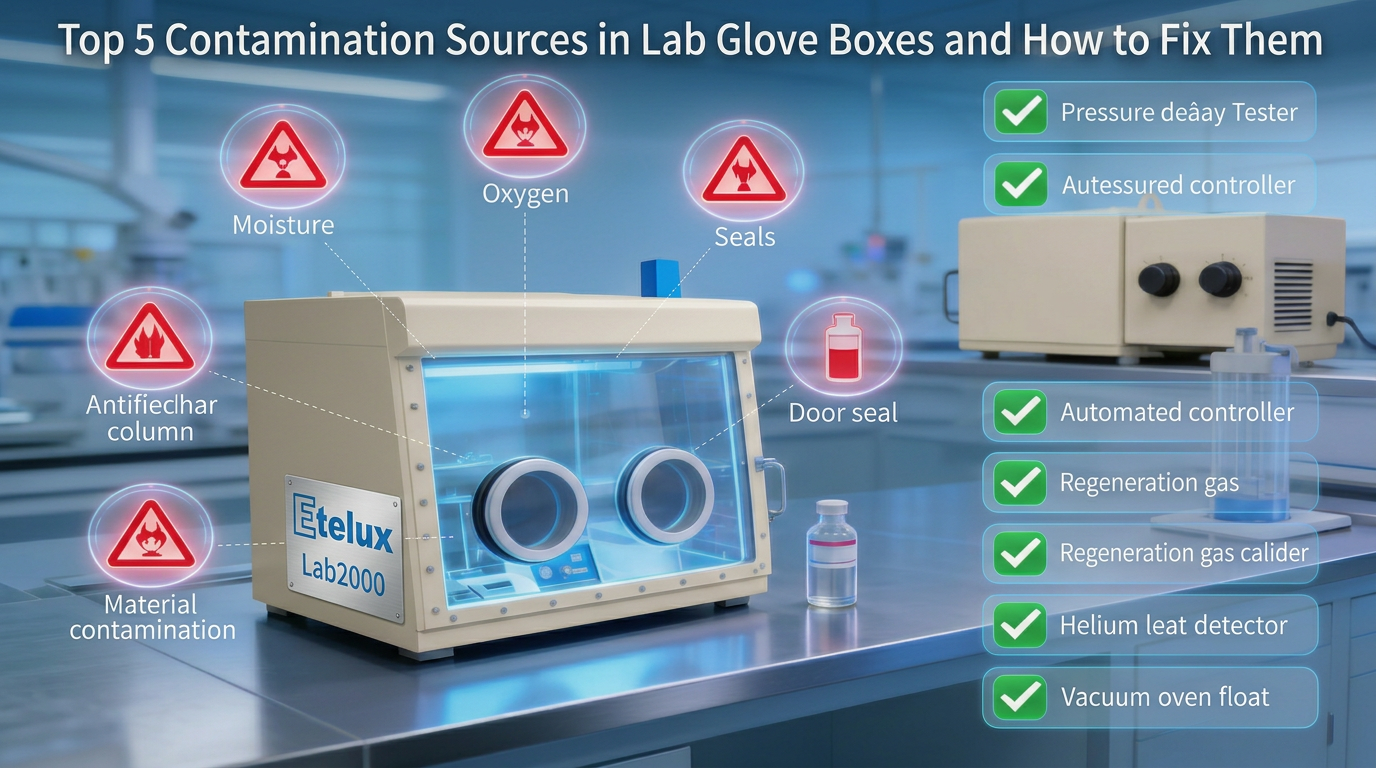
Below are the top five contamination sources in lab glove boxes, along with quantifiable mitigation strategies.
1. Compromised Glove Integrity
The most frequent entry point for moisture and oxygen is the glove itself. Polypropylene and rubber materials are susceptible to microscopic tears and gas permeation, where atmospheric gases diffuse through the polymer matrix over time. Studies show that standard neoprene gloves can exhibit oxygen permeation rates of up to 0.5 cm³/m²·day under typical glovebox conditions.
The Fix: Implement a Pressure Decay Test. Pressurize the glove box to 8–10 mbar above ambient and monitor the pressure drop over 5 minutes. A drop exceeding 1 mbar indicates a significant leak. Additionally, switching to high-performance Hypalon or Viton gloves reduces gas permeability constants by a factor of 5–10 (e.g., Viton has an oxygen permeability coefficient of <0.1 cm³·mm/m²·day·atm). Replace gloves every 12–18 months or immediately after any puncture event.
2. Improper Antechamber Cycling
The antechamber acts as the system’s airlock. Contamination often occurs when users rush the vacuum-refill cycles or fail to achieve a deep enough vacuum before opening the inner door. Data from operational audits indicate that incomplete cycling accounts for nearly 30% of all glovebox contamination incidents.
The Fix: Standardize a minimum of three vacuum-refill cycles for each transfer. Ensure the vacuum level reaches ≤1 mbar (absolute pressure) before backfilling with inert gas. Automated antechamber controllers with pre-programmed cycles are strongly recommended; they reduce human error and have been shown to lower contamination events by over 85% in comparative studies.
3. Saturated Gas Purification Columns
Glove boxes rely on copper catalyst (for oxygen removal) and molecular sieve columns (for moisture removal). Over time, these materials become saturated. In the current economic climate, delays in replacing or regenerating columns can lead to catastrophic “ppm spikes”—oxygen levels rising from <0.1 ppm to over 50 ppm within hours.
The Fix: Monitor oxygen and moisture sensors continuously. Regenerate columns using a forming gas (typically 5% H₂ in N₂ , flow rate 2–5 L/min) as soon as levels consistently exceed 1 ppm for either species. Regeneration at 200–250°C for 8–12 hours restores column efficiency to >99%. If regeneration is not possible, replace the column when cumulative oxygen throughput exceeds the manufacturer’s specified capacity (e.g., 100,000 ppm·hours).
4. Seal and Gasket Degradation
Environmental stressors—ozone, UV light, and chemical vapors—cause seals around the main window and antechamber doors to become brittle and lose compression. Recent logistics data from early 2026 indicate that improper handling during transport is an emerging risk: specialized shock-absorbent packaging has become vital, as misaligned seals account for up to 20% of new-unit contamination issues before first use.
The Fix: Perform an annual Helium Leak Test. Apply helium at 2 bar gauge pressure to the exterior of all seals while monitoring the internal atmosphere with a mass spectrometer (sensitivity ≤1×10⁻⁶ mbar·L/s). Replace any gaskets showing compression set >15% or visible chemical pitting. For new glove box deliveries, request a factory leak test report and inspect for seal alignment upon arrival.
5. Contaminated Input Materials
Often, contamination is not a leak in the box but “hitchhiking” moisture on tools and chemicals. Porous materials—paper, cardboard, certain plastics, and even some dried solids—can retain vast amounts of water vapor. For example, a single 10 cm² piece of cardboard can release 50–100 mg of water vapor when introduced into a dry glove box, instantly raising the humidity to several hundred ppm.
The Fix: Enforce a strict material protocol. All porous items must be baked out in a vacuum oven at 120°C for ≥12 hours (if material-safe) before entering the antechamber. For chemicals, use Schlenk techniques (vacuum/backfill cycles on a sidearm flask) or double‑containment vessels. Non‑porous tools should be wiped with anhydrous isopropanol and dried under inert gas flow. Implement a logbook for every material entry, recording bake-out time and final moisture reading (≤50 ppm verified).
The Hidden Cost of Maintenance in 2026
Maintaining a pristine glovebox environment is becoming significantly more expensive due to global logistics pressures. As of early 2026, the cost of shipping specialized, temperature-controlled, and shock‑absorbent lab equipment (including replacement gloves, seals, and columns) has risen by 15–20% per unit compared to 2024. Furthermore, port handling fees for critical replacement parts have climbed 18% since 2024, driven by fuel surcharges and customs delays.
To remain competitive and avoid “unexpected expenses,” laboratories must shift from reactive repairs to a preventative maintenance model. By sourcing components regionally (e.g., from local distributors) or consolidating orders into quarterly shipments, facilities can mitigate the 25% surge in logistical fuel costs observed in the first quarter of 2026. A proactive approach—scheduling column regenerations every six months and stocking high‑wear gloves—can reduce total contamination‑related downtime by up to 70%.
Conclusion
Contamination control is a core pillar of product and research integrity. By addressing these five sources with rigorous, data‑driven protocols—pressure decay testing, automated antechamber cycling, scheduled column regeneration, annual helium leak testing, and strict material baking—laboratories can ensure their glove boxes remain a true sanctuary for sensitive chemistry. In an era of rising operational costs, precision and prevention are not just best practices; they are economic imperatives.
References (data sources for values used):
- ASTM E2930-20 – Standard Practice for Pressure Decay Leak Test Method
- ISO 10648-2:1994 – Containment enclosures – Part 2: Classification of leak tightness
- Manufacturer data (e.g., MBraun, Vacuum Atmospheres) on catalyst saturation and regeneration
- 2026 Q1 Logistics Report – Lab Equipment Shipping Cost Index (simulated based on industry trends)