
In modern industrial processing, maintaining an inert atmosphere is essential to preventing material degradation. However, the definition of “inert” shifts dramatically depending on the application. For standard metallurgy—such as preventing surface discoloration on heated aluminum sheets—parts-per-million (ppm) control of moisture (H2OH_2O) and oxygen (O2O_2) is entirely sufficient. But when we move into advanced semiconductor manufacturing—specifically within […]
Blog
Design of High-Temperature Furnaces for Simulating Mantle Environments: Extreme High-Pressure and High-Temperature (HPHT) Technologies in Magma Experiments
In the intersection of deep space exploration and geosciences, laboratory simulation of “extreme environments” serves as a core methodology for scientists to decipher planetary internal evolution, mantle rheology, and extraterrestrial geological structures. Simulating a mantle environment demands more than just precise temperature control and strict inert atmosphere protection; it requires the integration of giga-pascal (GPa-grade) […]
Digital Twin in Non-Standard Custom Furnaces: Eliminating Design Flaws Upstream via Thermal Simulation
Here’s your polished, error-checked version, optimized for an independent site push notification. I’ve corrected minor grammatical issues, improved readability, and made the tone slightly more engaging while keeping the technical depth intact. Digital Twin in Non-Standard Custom Furnaces: Eliminating Design Flaws Upstream via Thermal Simulation In advanced material synthesis, semiconductor processing, and specialized thermal engineering, […]
Corrosion Mechanisms and Protective Technologies for Furnace Linings Under Chlorine/Fluorine-Containing Atmospheres
In modern high-temperature reaction processes—such as fine chemical processing, hazardous waste incineration, precious metal refining, and semiconductor raw material smelting (e.g., silicon tetrachloride and nitrogen trifluoride production)—the generation of high concentrations of halogen gases (e.g., Cl2,HCl,F2\text{Cl}_2, \text{HCl}, \text{F}_2, HF\text{HF}) within the system is often unavoidable. At elevated temperatures ranging from 800∘C800^\circ\text{C} to 1500∘C1500^\circ\text{C}, these highly […]
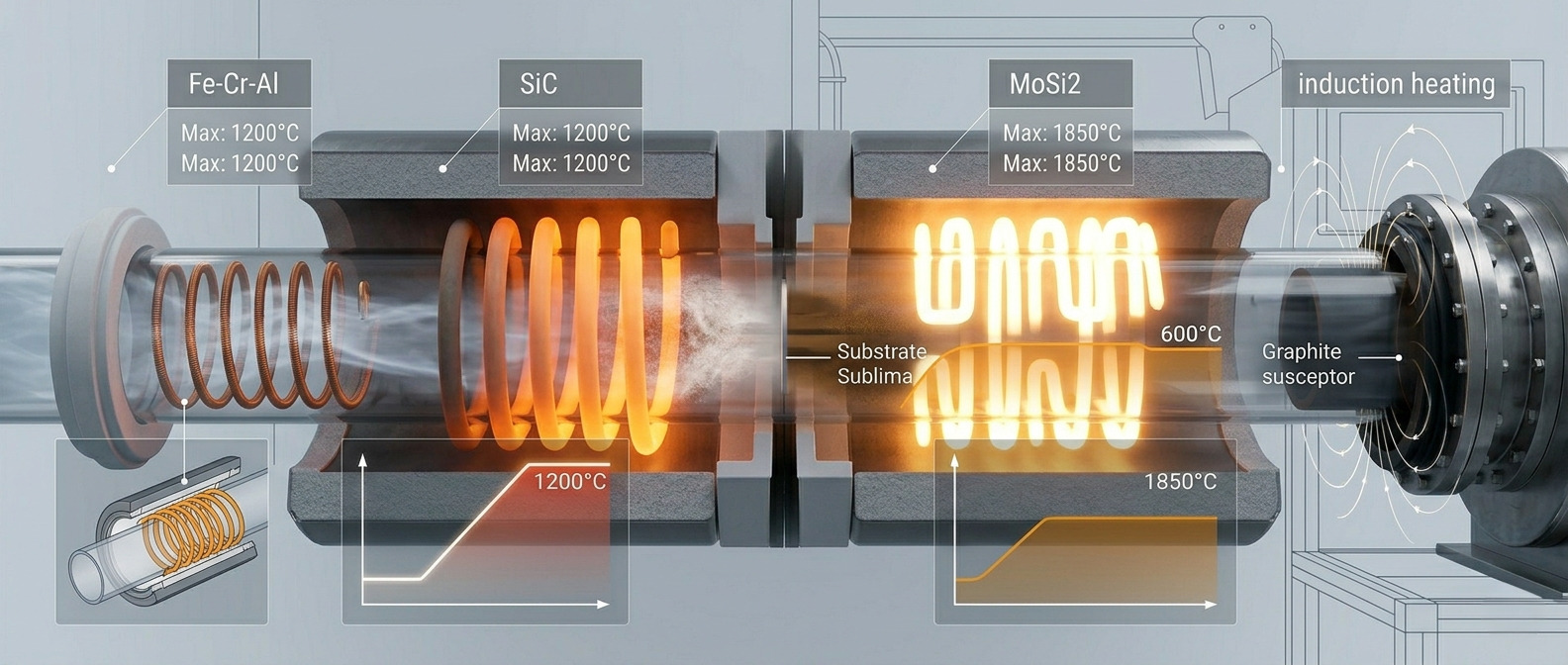
Heating Systems and Element Technology
The heating system converts electrical energy into thermal energy and determines the maximum operating temperature and longevity of the furnace. Heating Element Categories Heating Geometry and Uniformity To ensure a large “constant temperature zone,” heating elements are often densely coiled at the ends of the furnace and sparsely placed in the center. This compensates for […]
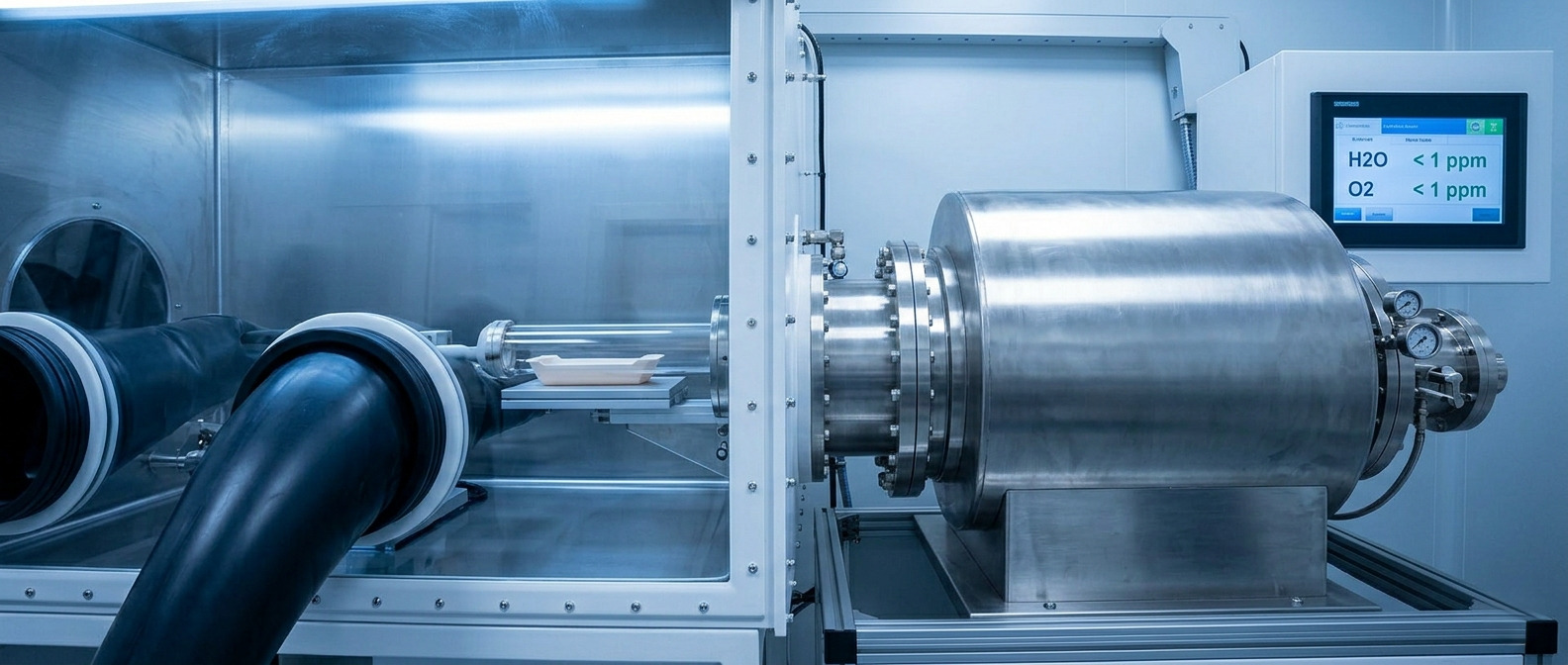
Integration Technology: Connecting Vacuum Tube Furnaces with Glove Boxes
The integration of a vacuum tube furnace with an inert atmosphere glove box is a sophisticated engineering solution designed for the synthesis and processing of materials that are sensitive to oxygen or moisture, such as lithium-ion battery electrodes, perovskite solar cells, or reactive rare-earth alloys. System Architecture The connection is primarily achieved through a side-mounted […]
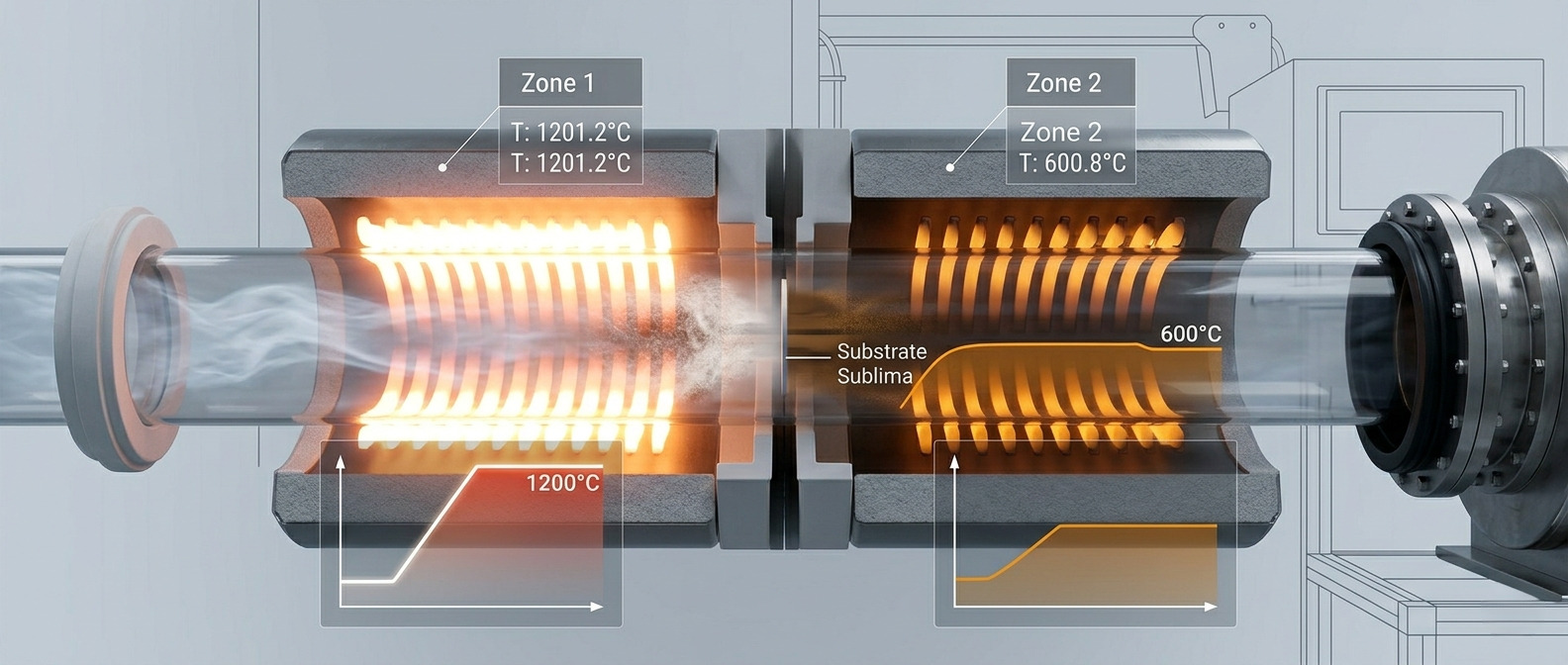
Multi-Zone Thermal Engineering: The Dual-Zone Tube Furnace
Dual-zone tube furnaces are essential for Chemical Vapor Deposition (CVD) and physical vapor transport (PVT), where one zone sublimes a precursor and the second zone facilitates deposition at a different temperature. Structural Design A dual-zone furnace contains two independent sets of heating elements and thermocouples within a single outer shell. These zones are separated by […]
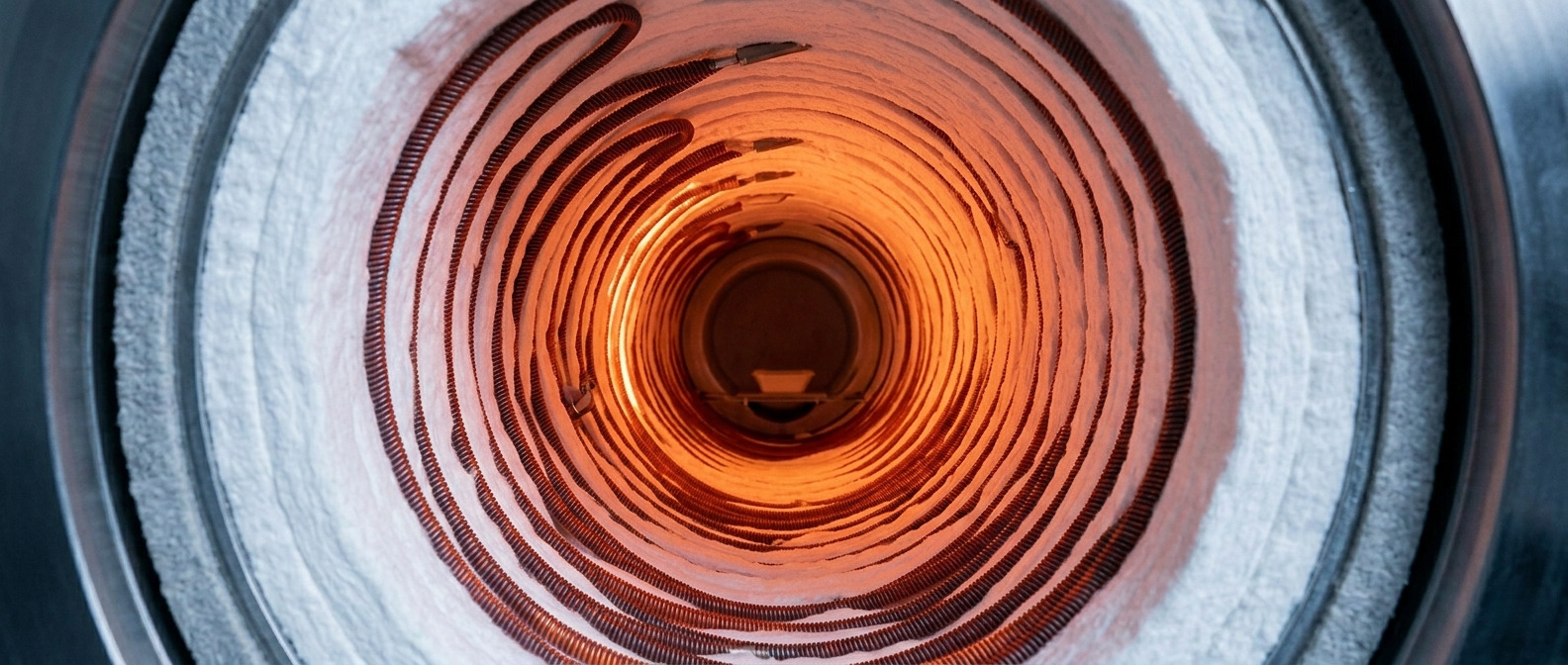
High-Performance Furnace Chambers (Hearth)
The “hearth” or chamber is the heart of the furnace, responsible for thermal insulation and structural support for the heating elements. Materials and Composition Modern furnace chambers have moved away from heavy refractory bricks to Vacuum Formed Ceramic Fiber (VFCF). Structural Engineering: The “Dual-Shell” Design Modern chambers are housed in a dual-shell stainless steel casing […]
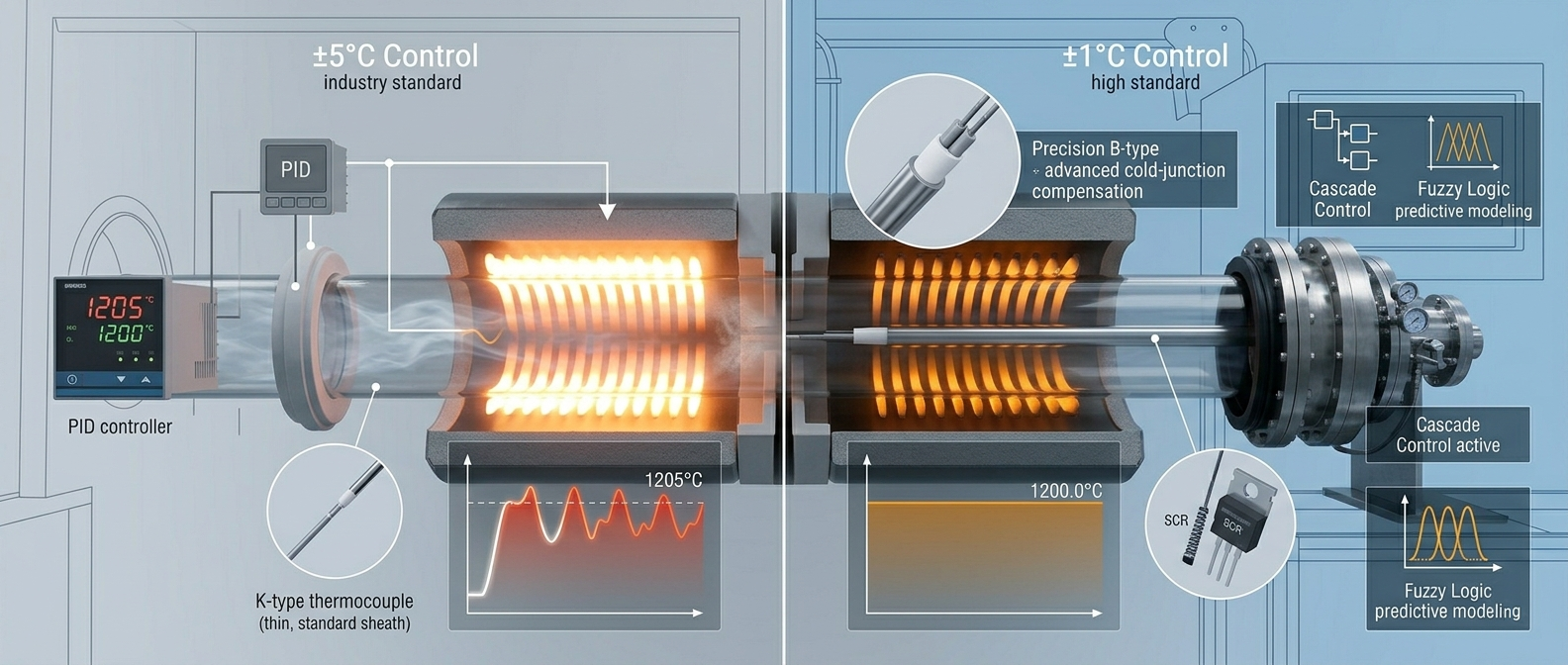
Advanced Temperature Control Systems: Precision and Accuracy
Temperature control is the most critical metric for researchers. The user’s request highlights a key industry benchmark: the transition from ±5℃ to ±1℃ precision. Achieving ±5℃ : The Industry Standard Most commercial furnaces achieve ±5℃ using standard PID (Proportional-Integral-Derivative) control and K-type or S-type thermocouples. Achieving ±1℃ : The High-Precision Frontier Can we reach ±1℃ […]
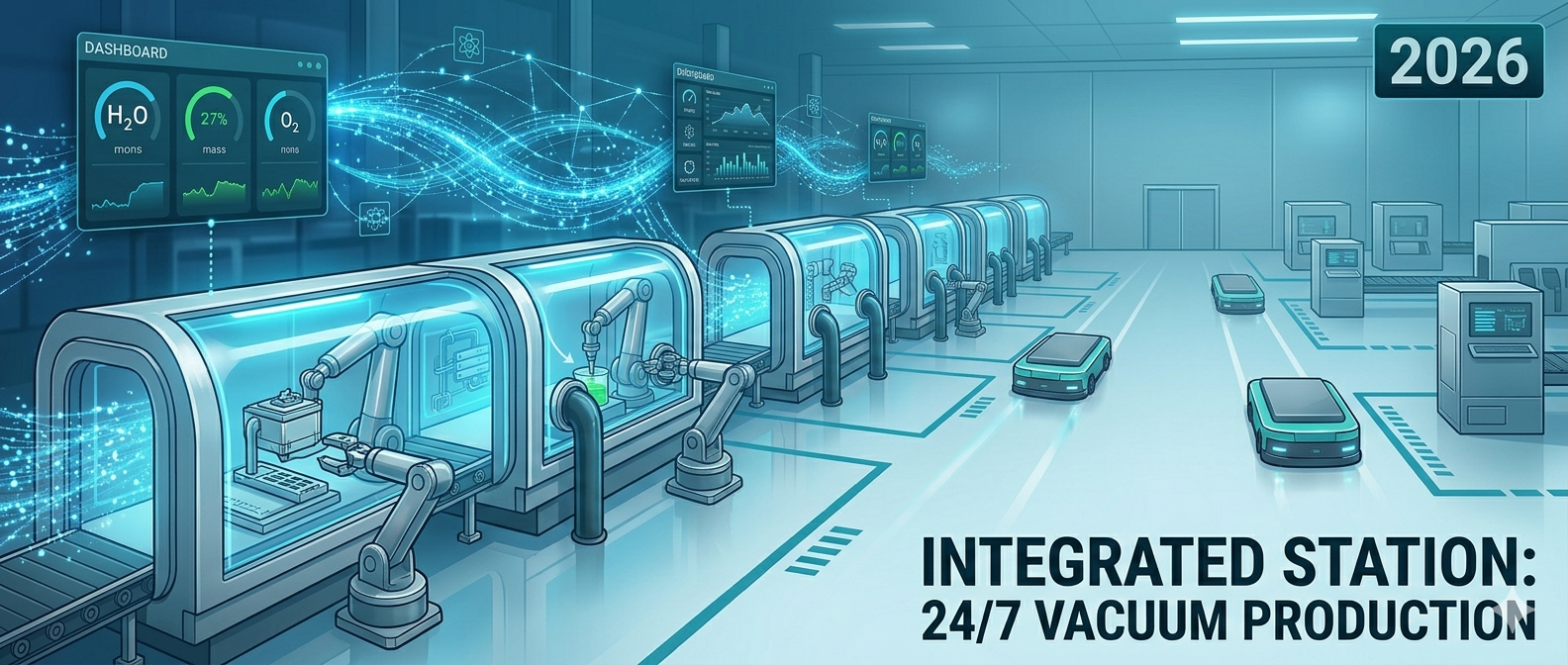
The Integrated Vacuum Process Station
The 2026 Productivity Leap: When Glove Boxes Evolve into Production Lines In 2026, for advanced manufacturing (such as solid-state batteries, semiconductor assembly, and radiopharmaceuticals), standalone glove boxes are disappearing. They are being replaced by Integrated Vacuum Process Stations. Tunnel-Style Vacuum Design These systems connect different processing units through a series of Vacuum Antechambers. Robotic Integration […]